
Lab · Safety
Anaphylaxis: what it is, what doctors do, and why some people carry an adrenaline pen
Anaphylaxis is the most severe kind of allergic reaction. It is treatable, and the treatment is simple: adrenaline (called epinephrine in the US), given early into the outer thigh. Here is what happens in the body, what to do, what paramedics and doctors do next, and how the medicine works.
If this is happening now: lay the person flat (or let them sit with legs out straight if breathing is hard), give their adrenaline device into the outer thigh, and call 911 (US, Canada), 000 (Australia), 999 (UK) or 112 (EU). Do not let them stand or walk. Jump to the steps.
Anaphylaxis (say "ana-fil-AX-is") is the most severe type of allergic reaction, and it is always a medical emergency (ASCIA). The good news: it has a fast, well-tested treatment that people without medical training can give. That treatment is adrenaline, the name used in Australia and the UK. In the US it is called epinephrine. They are the same medicine.
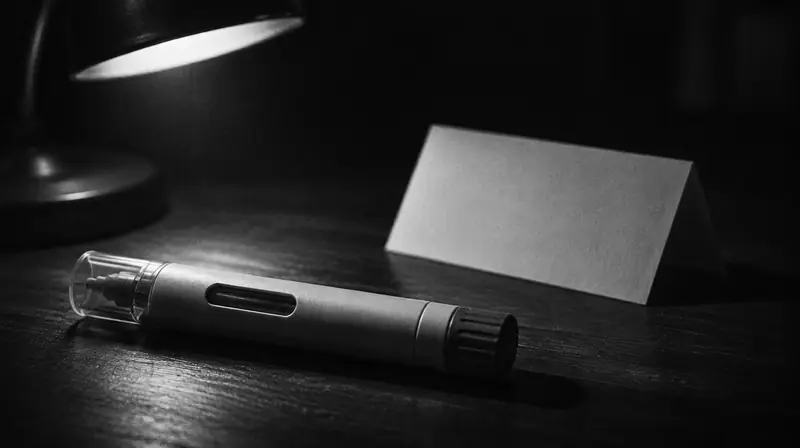
Many people at risk carry an adrenaline (epinephrine) auto-injector, a pen-shaped device with a hidden needle that gives one measured dose into the thigh. EpiPen is one brand. Others include Anapen and Jext (listed by ASCIA), Auvi-Q (named in the 2023 US practice parameter), and neffy, a nasal spray approved by the FDA in 2024 and listed by ASCIA in 2026.
Labels on this page: Fact means it comes from a clinical guideline, a regulator, a medicine label or a published study, named in brackets.
What happens in the body
Your immune system normally ignores harmless things. In an allergy it reacts to one of them, the trigger, as if it were a threat.
- Fact Immune cells called mast cells (and basophils) carry antibodies that recognise the trigger. When they meet it, they release a flood of chemicals at once (WAO). One of the best known is histamine (Cleveland Clinic).
- Fact Those chemicals make blood vessels widen and leak. Fluid moves out of the blood into the tissues, which causes swelling, and blood pressure falls (Resuscitation Council UK; FDA EpiPen label).
- Fact Muscle around the airways tightens and the airway lining swells, which causes wheeze and trouble breathing (Resuscitation Council UK).
- Fact With less fluid in the circulation and wide, slack vessels, less blood returns to the heart. If this goes far enough, it becomes shock (Resuscitation Council UK).
That is why anaphylaxis can kill in two ways: the airway closes, or the blood pressure collapses.
Common triggers
- Fact The most common are foods, insect stings and medicines (ASCIA). Foods include nuts, cows' milk, eggs, fish and sesame; medicines include some antibiotics and anti-inflammatory painkillers (NSAIDs); latex and anaesthetics can also cause it (NHS).
- Fact Sometimes no trigger is ever found (NHS).
- Fact Exercise, heat and alcohol can make a reaction worse (ASCIA).
- Fact Injected substances can act fastest. In fatal cases, the UK guideline reports that deaths caused by medicines given into a vein happen most often within five minutes (Resuscitation Council UK).
The signs, and how fast they come
- Fact It usually starts within minutes of contact with the trigger (NHS); often within 5 to 30 minutes, sometimes later than an hour (Cleveland Clinic).
- Fact Signs of anaphylaxis, any one of which is serious: difficult or noisy breathing; swelling of the tongue; swelling or tightness in the throat; wheeze or a cough that will not stop; difficulty talking or a hoarse voice; dizziness that will not go away, or collapse; a young child who is pale and floppy. Stomach pain and vomiting count as signs of anaphylaxis after an insect sting (ASCIA First Aid Plan).
- Fact Milder signs can come first: swelling of the lips, face or eyes; hives or welts; a tingling mouth. But anaphylaxis can happen without any skin signs, and the milder signs do not always come first (ASCIA First Aid Plan).
What to do: the bystander steps
These steps follow the ASCIA First Aid Plan (2026), with the NHS and the Resuscitation Council UK where they add detail.
- Lay the person flat. Do not let them stand or walk. Fact If breathing is hard, let them sit with legs out straight. If they are unconscious, or pregnant, place them on their side (the left side if pregnant). Hold a young child flat, not upright (ASCIA). The NHS adds: raise their legs if lying down (NHS).
- Give the adrenaline device. Into the outer middle of the thigh (see the diagrams below). Fact "If in doubt, give adrenaline device" (ASCIA).
- Call an ambulance. 911 in the US or Canada, 000 in Australia, 999 in the UK, 112 in the EU. Say it is anaphylaxis (NHS).
- Call family or an emergency contact (ASCIA).
- A second dose after 5 minutes if there is no improvement or they are getting worse. Fact ASCIA and the NHS both use 5 minutes, and ASCIA says there is no evidence that using the same thigh is a problem (ASCIA FAQ; NHS).
- Keep them lying or sitting, even if they feel better. Fact "Do not stand or walk at any time, even if you feel better" (NHS). Bring the device to them; do not let them walk to it (ASCIA FAQ).
- Start CPR at any time if they are unresponsive and not breathing normally (ASCIA).
- Hospital, always. Fact ASCIA says at least 4 hours of observation in hospital after the last dose of adrenaline (ASCIA). Give the used device to the paramedics with the time it was given (ASCIA).
Fact If the person has asthma and sudden, severe breathing trouble, ASCIA says to give the adrenaline device first, then the asthma reliever (ASCIA First Aid Plan).
Fact In the US, the 2023 practice parameter adds a nuance: a patient whose symptoms go away fast and completely after one dose may not need an ambulance straight away, if more adrenaline and care are close at hand. It also says to always call if the reaction is severe, does not settle fully and quickly, or comes back after the first dose (Golden et al. 2023). That choice is meant to be planned ahead with the person's own doctor. In the moment, if you are not sure, call.
Where the injection goes
Why the thigh?
- Fact The best site is the outer side of the middle third of the thigh (Resuscitation Council UK), "around halfway between the hip and knee" (ASCIA FAQ).
- Fact The medicine goes into muscle, where it is absorbed quickly, and it is very unlikely to damage a nerve or tendon there (ASCIA FAQ).
- Fact In a small study in healthy young men (not people having a reaction), blood levels of adrenaline peaked higher after a muscle injection in the thigh than after a muscle injection in the upper arm or an injection under the skin of the arm (Simons 2001). Injection just under the skin is not recommended because it works less well (Resuscitation Council UK).
- Fact It can go through clothing if needed (FDA EpiPen label), a single layer, avoiding seams, pockets and very thick fabric (ASCIA FAQ).
- Fact Not into a vein, the buttock, fingers, hands or feet (FDA EpiPen label).
Using an auto-injector: the general sequence
-
1 Hold it in your fist. Pull off the safety cap. Keep thumb and fingers off both ends.
-
2 Place the tip against the outer middle of the thigh, at a right angle. Clothing is fine.
-
3 Push hard until it clicks. Hold it there for 3 seconds.
-
4 Remove it. Note the time. Call an ambulance. Give the used device to the paramedics.
- Fact Hold the device firmly against the thigh for at least 3 full seconds, or it may not deliver the full dose (FDA EpiPen label). ASCIA's instructions for EpiPen, Anapen and Jext also say 3 seconds (ASCIA 2026).
- Fact The nasal spray works differently: the nozzle goes into a nostril. Do not test-spray it (ASCIA 2026).
- Fact Each device is single use (ASCIA 2026).
What paramedics and emergency doctors do
The Resuscitation Council UK guideline (2021) sets out the hospital and ambulance approach. ASCIA's 2026 guideline agrees on the main points.
- Fact Adrenaline into the muscle comes first, in every setting. It is safer than giving it into a vein and needs no drip (Resuscitation Council UK).
- Fact Repeat after 5 minutes if there is no improvement (Resuscitation Council UK).
- Fact Oxygen, at the highest flow at first, then adjusted (Resuscitation Council UK).
- Fact Fluids into a vein, quickly, if blood pressure is low. Up to a third of the blood volume can leak out of the vessels (Resuscitation Council UK).
- Fact If two doses have not worked, the team starts a slow, continuous adrenaline drip with close heart monitoring, and calls in critical care. Fewer than 1 in 100 reactions need this (Resuscitation Council UK).
- Fact Antihistamines and steroids are not first-line. Antihistamines do nothing for the breathing or blood pressure problems; they may be used later for itchy skin. Steroids are no longer advised as routine (Resuscitation Council UK; ASCIA).
- Fact Observation, because of a second wave. A "biphasic" reaction is when symptoms come back hours later without any new contact with the trigger. The UK guideline puts it at about 5 in 100 people (Resuscitation Council UK); ASCIA gives 3 to 20 in 100, within 48 hours (ASCIA). People usually stay 2 to 12 hours (NHS), longer after a severe reaction.
- Fact Before going home: a prescription for adrenaline devices, training in how to use them, a written action plan, and a referral to an allergy specialist (ASCIA; Resuscitation Council UK; NHS).
How adrenaline saves a life
Adrenaline works on several kinds of "receptor", the switches on cells that respond to it.
- Fact Alpha receptors, on blood vessels: the vessels tighten and leak less. Blood pressure comes back up and swelling eases (FDA EpiPen label; Resuscitation Council UK).
- Fact Beta receptors, on the heart: it beats more strongly (Resuscitation Council UK).
- Fact Beta receptors, on the airways: the muscle around them relaxes, so they open and wheeze eases (FDA EpiPen label).
- Fact Beta-2 receptors, on mast cells: fewer allergy chemicals are released, so early adrenaline may make the whole reaction less severe (Resuscitation Council UK).
- Fact It works best when given early. Delay is linked with longer reactions, low blood pressure and deaths (Resuscitation Council UK). Absorption peaks around 5 to 10 minutes after a muscle injection (Resuscitation Council UK).
- Fact Serious side effects from adrenaline into the muscle at the right dose are very rare, and should not stop anyone from using it (Resuscitation Council UK; Golden et al. 2023). Looking pale afterwards can be caused by the adrenaline itself, as the vessels tighten (Resuscitation Council UK).
Who carries a pen, and why two
- Fact A doctor prescribes it. The UK guideline says a device is appropriate for everyone who has had anaphylaxis, except where the trigger was a medicine that is easy to avoid (Resuscitation Council UK). In Australia, the subsidised prescription follows a specialist's assessment, or a hospital visit for anaphylaxis (ASCIA FAQ). US allergists weigh each person's risk and preferences (Golden et al. 2023).
- Fact Two devices, at all times, in case a second dose is needed before the ambulance arrives (NHS; ASCIA FAQ; Resuscitation Council UK).
- Fact The dose depends on body weight. As one example, ASCIA's 2026 instructions list these strengths:
ASCIA (2026) lists 150 microgram injectors for children of about 17 to 44 lb (7.5 to 20 kg), 300 microgram injectors for children over 44 lb (20 kg) and adults, and a 500 microgram injector for people over 110 lb (50 kg). US labels differ slightly. The prescribing doctor chooses the device (ASCIA First Aid Plan 2026).
- Fact Check expiry dates. Shelf life is usually one to two years from when it was made. Mark the date on a calendar and replace it before then (ASCIA FAQ).
- Fact Keep it cool and dark, at room temperature up to 77°F (25°C), not in the fridge or freezer (ASCIA).
- Fact Have a written action plan from your doctor, such as an ASCIA Action Plan (ASCIA).
- Fact Practise with a trainer pen, which has no needle and no medicine, at least twice a year, and teach family and friends (ASCIA; NHS). Keep the trainer apart from the real devices (ASCIA FAQ).
Common mistakes the guidelines name
- Waiting. Fact Delayed adrenaline can result in death (ASCIA). If in doubt, give it (ASCIA).
- Standing up, walking or sitting up suddenly. Fact Death can happen within minutes if a person stands, walks or sits up suddenly (Resuscitation Council UK). ASCIA also says not to take a shower, even if they feel very hot: standing and warm water can both lower blood pressure (ASCIA FAQ).
- Relying on an antihistamine. Fact Antihistamines do not treat the breathing or blood pressure problems (Resuscitation Council UK; ASCIA).
- Injecting a thumb or finger. Fact Never put a thumb, fingers or hand over the needle end. An accidental injection into a finger, hand or foot can cut off blood flow there: give a second dose into the thigh and go to the emergency department (FDA EpiPen label).
- Waiting for a rash. Fact Anaphylaxis can happen with no skin signs (ASCIA).
- Skipping hospital because they feel better. See "second wave" above.
- Using an expired pen when there is a choice. Fact An expired device is less effective; but if it is the only one, ASCIA says to use the most recently expired one rather than nothing (ASCIA FAQ).
The Richard Norton case
The death of the actor and martial artist Richard Norton in 2025 is the reason this page exists. Reports of the Victorian coroner's finding say the cause included anaphylaxis, and that the death was triggered by self-injected, prescribed but unapproved peptides. Read what is confirmed in the case file.
Two things to be plain about:
- Carrying an adrenaline pen does not make an unapproved injection safe. A pen treats a reaction; it does not prevent one, and it does not replace an ambulance and a hospital.
- An adrenaline pen is a prescription medicine, prescribed by a doctor who has assessed your risk. If you are worried about allergic reactions to anything you take, that is the conversation to have, with your doctor. See Baseline.
General information, not medical advice. Anyone who may be at risk of anaphylaxis should get a personal plan from their own doctor. In an emergency call 911 (US, Canada), 000 (Australia), 999 (UK) or 112 (EU).
Sources
Each source was opened and checked on 24 November 2026. The year is when the source was published or last reviewed.
- ASCIA First Aid Plan for Anaphylaxis (web page)
- First Aid Plan for Anaphylaxis, with How to use adrenaline (epinephrine) devices (PDF)
- Adrenaline (Epinephrine) Devices: Frequently Asked Questions (PDF)
- ASCIA Guidelines: Acute Management of Anaphylaxis
- Adrenaline (Epinephrine) Devices
- Anaphylaxis (patient information)
- Emergency treatment of anaphylaxis: Guidelines for healthcare providers (PDF)
- Anaphylaxis
- Golden DBK et al. Anaphylaxis: A 2023 practice parameter update (Joint Task Force on Practice Parameters, AAAAI and ACAAI)
- EpiPen and EpiPen Jr (epinephrine injection): prescribing information
- FDA approves first nasal spray for treatment of anaphylaxis
- Cardona V et al. World Allergy Organization Anaphylaxis Guidance 2020
- Simons FE, Gu X, Simons KJ. Epinephrine absorption in adults: intramuscular versus subcutaneous injection
- Anaphylaxis
- 112: the European emergency number
- Alberta 911 program (911 is federally required across Canada)