
Lab · Example sheet
The concentration triangle
Know any two of the three and the triangle gives you the third.
The triangle
Three parts. Know two, find the third
Solute is the thing dissolved (the salt, the powder). Measured in mg.
Volume is the liquid it is dissolved in. Measured in mL.
Concentration is the strength: how many mg sit in each mL. Written mg/mL.
How to use it: cover the one you want to find. What is left shows the sum. Side by side means multiply. One above the other means divide.
Want the concentration?
Solute ÷ volume
Want the volume?
Solute ÷ concentration
Want the solute?
Concentration × volume
Try it
Fill in the two you know
Type numbers into any two parts of the triangle. The third fills itself in.
Nothing you type leaves this page. It is arithmetic only.
A worked example
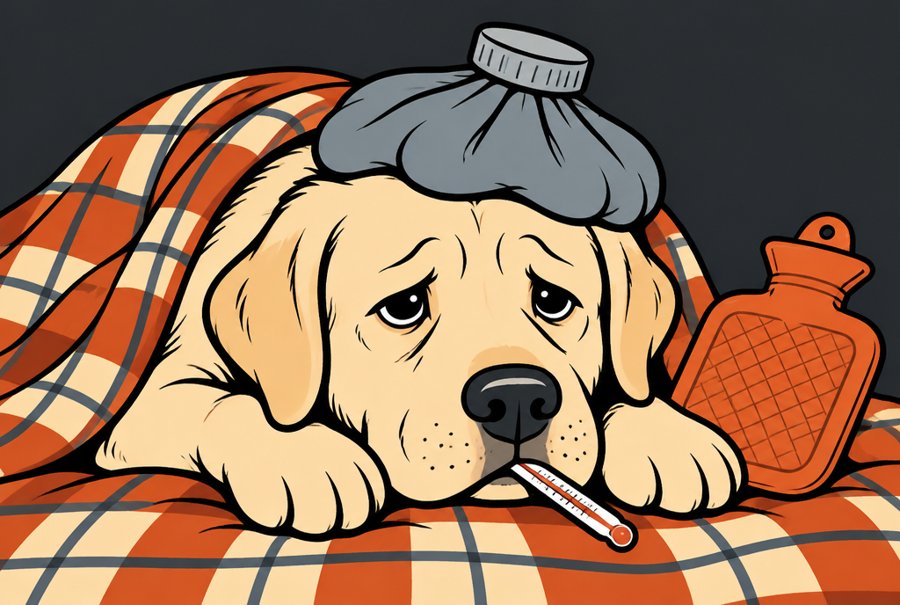
Your dog needs 10 mg of a substance. You have a vial holding 10 mg of it, freeze dried.
Step 1. You add 2 mL of water. Put 10 in Solute and 2 in Volume:
Step 2. You need 10 mg and each mL holds 5 mg. Put 10 in Solute and 5 in Concentration:
So you draw up 2 mL to get the 10 mg for your dog. If the dog needed only 5 mg, you would draw up 1 mL. Note: On an insulin syringe: 100 units = 1 mL.
Example 1
Saline solution
Standard saline is salt in water. The recipe is 9 g of salt in 1 L.
Same strength, written two ways. A percentage here just means grams in every 100 mL, which is why every bag of standard saline says 0.9%.
Example 2
Same solute, different volume
You always know your solute. Say it is 10 mg. The volume you add decides the strength.
Add 1 mL. Each mL holds 10 mg.
Add 2 mL. Twice the liquid, half the strength.
Example 3
Working backwards: finding the volume
A nurse has to give a patient 10 mg. Cover volume on the triangle: solute ÷ concentration.
The vial is 10 mg/mL
One mL holds the full 10 mg.
The vial is 5 mg/mL
5 mg plus 5 mg: two mL are needed.
The amount given is the same 10 mg both times. Only the volume changes.
For the curious
How a chemistry class writes it
Chemists count solute in moles, so C is moles per L. The same triangle works in g or mg, as in the examples above.
This sheet shows arithmetic taught at school. The numbers are examples, not doses, and nothing here is medical advice.