
How to read a COA, line by line
Identity, purity, the amount in the vial, endotoxin, sterility and heavy metals: what each line means, what a sound result looks like, and what most reports leave out.
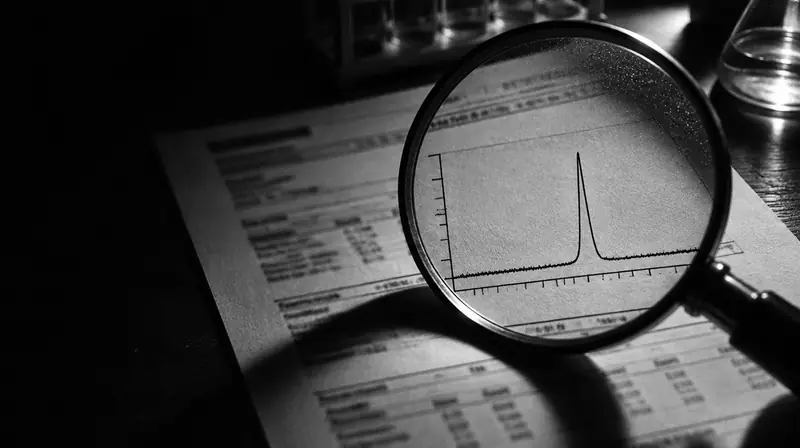
Read a COA from the top down. Each line answers a different question, and a report that answers only one of them leaves the rest open.
1. The header: what, which batch, when, who
- Product name and batch or lot number. The batch number must match the one printed on the vial in front of you, exactly. A report for another batch tells you nothing about yours.
- Sample received and test dates. Peptides can break down. An old report on an old batch says less about a product sold today.
- Client. Who sent the sample. If it was the seller or the factory, read Who issued it.
- Lab name, address and a way to contact or verify. You need these to check the report is real.
2. Identity: is it the right molecule?
Fact Identity for peptides is usually tested by mass spectrometry (MS, often written LC-MS when combined with liquid chromatography). It measures the mass of the molecule and compares it with the expected mass (Bachem guide). A US testing lab describes the test as confirming "by molecular mass that the compound is what the label says" (Freedom Diagnostics).
What a sound line looks like: an expected mass, a measured mass that matches it closely, and a clear "conforms" or "pass". What to watch for: a purity number with no identity test at all. A pure sample of the wrong peptide still scores high on purity. One popular guide sums up its example of a high HPLC result with the wrong mass in four words: "Product is pure → but wrong compound" (Dudeja, How to Identify Real vs Fake Peptides, 2026, PDF p.11). Matching the whole mass is strong evidence of identity, but not proof of every detail: confirming the exact sequence takes a further test that breaks the molecule into pieces (MS/MS), which the same guide mentions on p.11.
3. Purity: how much of what was detected is the main peptide?
Fact Purity is usually measured by HPLC (high-performance liquid chromatography). The lab works out the area of the main peak as a share of the area of all detected peaks (Bachem guide).
What a sound line looks like: a percentage, the method, and ideally the chromatogram (the trace with its peaks) attached. The guide says to look at the trace itself: one tall, narrow main peak is what you hope to see, while several sizeable peaks, a broad peak or a "shoulder" on the main peak suggest other material, and the main peak's timing should match a reference sample of the peptide run the same way (Dudeja, 2026, PDF p.9). What purity does not include: Fact water, leftover salts and counter-ions such as TFA (trifluoroacetic acid) are not counted in the HPLC purity percentage (LifeTein). So "99% pure" does not mean 99% of the powder is peptide.
4. Amount: how much is actually in the vial?
Fact The share of the powder that is peptide is called net peptide content. The rest is mostly counter-ions and water, and Bachem states plainly that net peptide content "and purity are not equivalent" (Bachem guide). Some labs report a separate quantity or net content result: how much peptide was measured in the vial compared with the label (Freedom Diagnostics; Finnrick methodology).
What to watch for: a report with purity but no amount. Be wary of anyone who says the amount cannot be measured: the guide above claims labs test purity, not the actual content per vial (PDF p.13), but labs do offer a separate content or quantity test, as shown above. Fact A 2024 test-purchase study of semaglutide sold online without a prescription found measured content well above the labelled amount in every sample tested, alongside purity far below what was advertised (JAMA Network Open, 2024). Wrong amounts in either direction matter.
The question. "99% pure" does not mean 99% of the powder is peptide, and purity says nothing about how much is in the vial. A 2024 study found semaglutide bought online measured well above the label in every sample tested. Why is purity the number put up front? Who gains when you read it as the whole story?
5. Endotoxin: bacterial residue that causes fever
Fact Endotoxins are fever-causing material from the outer wall of certain bacteria. The US standard test is the Bacterial Endotoxins Test (USP chapter 85), which uses gel clot, photometric or kinetic methods, and the FDA recommends testing finished products (FDA endotoxin Q&A, 2026). Results are reported in endotoxin units (EU).
What a sound line looks like: the method, a result in EU, and the limit it was judged against. What most reports leave out: many peptide COAs have no endotoxin result at all. Even buyer guides miss it: the Dudeja guide lists endotoxins as a risk (PDF p.5) but leaves endotoxin out of its own COA checks (PDF p.12 to 13). People report The Finnrick testing project reports that nearly 8% of the grey-market samples it had tested for endotoxin contained more than the lowest amount its labs could measure, and that levels varied between sellers and between batches (Finnrick blog, February 2026).
6. Sterility: are there living microbes?
Fact The US sterility test (USP chapter 71) uses membrane filtration or direct inoculation, then incubates the samples for 14 days and checks for growth (Microchem Laboratory). A sterility result therefore takes at least two weeks.
What to watch for: sterility is a separate test from endotoxin. A sterile sample can still carry endotoxin, and a low endotoxin result does not prove sterility. Most peptide COAs people share show neither.
7. Heavy metals and other impurities
Fact For medicines, the FDA recommends that makers control elemental impurities, the metals that can enter a product from raw materials, equipment or packaging (FDA guidance, 2018). Labs report these as named elements with a result and a limit. Some peptide testing labs offer heavy metals as a separate test (Freedom Diagnostics).
What most reports leave out: metals, leftover solvents and the identity of the other peaks on the HPLC trace. Purity tells you how much of the detected material is not the main peptide; it does not tell you what that other material is.
The question. Endotoxin, sterility and heavy metals are the lines most reports leave out. The Finnrick project reports measurable endotoxin in nearly 8% of the grey-market samples it tested. Why are the tests that matter most for something you inject the ones that go missing? Who decided they were optional? We don't know.
8. Method, signature and accreditation
A sound report names each method, gives the limit or specification each result was judged against, and is signed by a named person at the lab. If the lab claims accreditation, check that the specific test on your report is covered (see Who issued it).
Quick summary: what each line answers
| Line | Question it answers | Common gap |
|---|---|---|
| Batch or lot number | Is this report about my vial's batch? | Missing, or does not match the vial |
| Identity (MS) | Is it the right molecule? | Left out; only purity shown |
| Purity (HPLC) | How much of what was detected is the main peptide? | Read as "how much is in the vial" |
| Amount or net content | How much peptide is actually in the vial? | Left out |
| Endotoxin | Is there fever-causing bacterial residue? | Left out |
| Sterility | Are there living microbes? | Left out |
| Heavy metals | Are there toxic metals? | Left out |
Sources
Each source was opened and checked on 24 November 2026. The year is when the source was published or last reviewed.
- Quality control of amino acids and peptides: a guide
- What is peptide purity?
- Peptide testing services (home page)
- Pyrogen and Endotoxins Testing: Questions and Answers
- USP 71 sterility testing explained
- Elemental Impurities in Drug Products: Guidance for Industry
- Testing methodology
- Why endotoxin testing matters for peptides
- Ashraf et al. Availability, quality and pricing of semaglutide sold online without a prescription (test purchases)
Books we drew on: How to Identify Real vs Fake Peptides (Dinesh Dudeja (Mentally Jacked), 2026), a 43-page PDF guide; the author sells coaching, supplements and a paid PDF bundle, states no credentials and cites no sources. Popular guides are quoted only to show what people are told, never as evidence. Their dose figures are not repeated here.